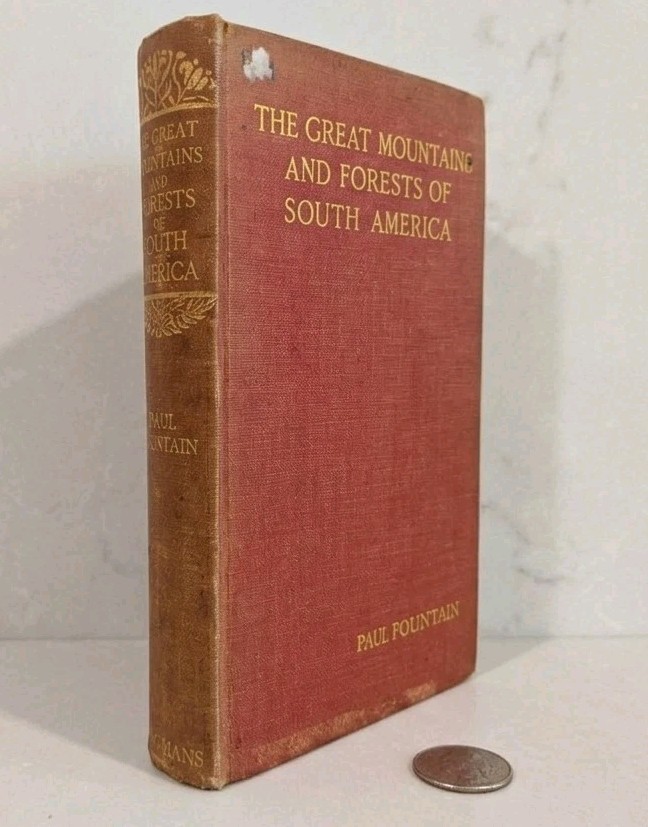
Shopping for antiquarian collectible books often becomes a tug-of-war between the romance of a century-old travel narrative and the practical questions every collector asks: Is this the right edition? Is the condition acceptable? Is the price fair? If you are drawn to early exploration literature, the 1904 Paul Fountain volume *The Great Mountains and Forests of South America* invites exactly those questions. Let's take a close look at what this particular antique book offers.
Quick Verdict
This is a genuine 1904 hardcover, published by Longmans, Green, and Co., in a second impression. At USD 42.37, it offers an approachable entry into antiquarian travel writing. If you want a period piece that captures late 19th-century South American exploration and you are comfortable with a second impression rather than a first, this book is a compelling choice. If you are a first-edition hunter, the second-impression status is the one factor that wants your attention.
Who It Suits
This title will suit readers and collectors with an interest in South American geography, natural history, and the kind of firsthand travel narrative that was popular at the turn of the 20th century. Because the author focuses on wilderness and wildlife, it also appeals to those who enjoy environmental history or early naturalist writing. For anyone building a collection of exploration books without chasing first editions, this volume fits neatly into that niche.
The Great Mountains and Forests of South America 1904 Paul Fountain Antique book
This specific copy is described as being in Good condition, with a hardcover cloth binding and text in English. The author is Paul Fountain, and the book was published by Longmans, Green, and Co. in 1904, marked as the Second Impression. The subject matter covers exploration, travel, and natural history, with an emphasis on the dense, untamed interiors of South America.
What makes the content distinctive is that it was written as a sequel to the author's earlier work on North America, so you are getting a companion piece. The narrative is a firsthand account from the late 19th century, giving you a window into how travelers of that era experienced the continent's mountains and forests.
What Stands Out from the Listed Details
The most obvious highlight is the age and provenance. A 120-year-old travel book with a recognizable publisher and a named author, available for under $50, is notable. The Good condition rating suggests the book has survived its journey through time without major damage, and the cloth hardcover binding is typical of the period.
Another strong point is the genre range. The book sits comfortably across exploration, travel, environment, and natural history, which makes it a versatile addition to a collection. If you are a reader who likes to actually open the books you collect, this narrative promises a vivid account of South American wilderness rather than a dry scholarly text.
The price point matters too. At USD 42.37, it sits in a reasonable range for a 1904 antique edition, especially one with a known publisher and a clear subject focus.
Meaningful Trade-offs
The main trade-off is the edition status. This is the Second Impression, not the first printing. For some collectors, a second impression carries less prestige and less long-term appreciation potential than a first impression. That is a legitimate consideration if you are shopping for investment value. If, however, you are collecting for content and historical atmosphere, the second impression still holds the full narrative and the same physical character.
Another trade-off is that the book is a single volume, and its condition is simply described as Good. That means there may be signs of age, such as foxing, shelf wear, or minor binding looseness, which are typical for a book of this era. Unless you are a condition purist, that is usually acceptable, but it is worth keeping in mind.
Bottom Line
For the reader or collector who values authentic Edwardian-era travel writing and wants a tangible piece of South American exploration history, this 1904 Paul Fountain book is a sensible pick. The price is reasonable, the subject is engaging, and the author's voice comes through as a genuine firsthand observer. If you can live with a second impression, this antique volume deserves a place on your shelf.